How Do Yellow Cards Work in the World Cup 2026?
Yellow cards in the World Cup 2026 serve as official cautions for player misconduct, with two yellow cards in a single match resulting in immediate ejection. Players who accumulate two yellow cards across different group stage matches face a one-match suspension, while yellow card counts reset after the quarterfinals. Understanding how do yellow cards work in the World Cup 2026 is crucial for fans following player availability throughout the tournament.
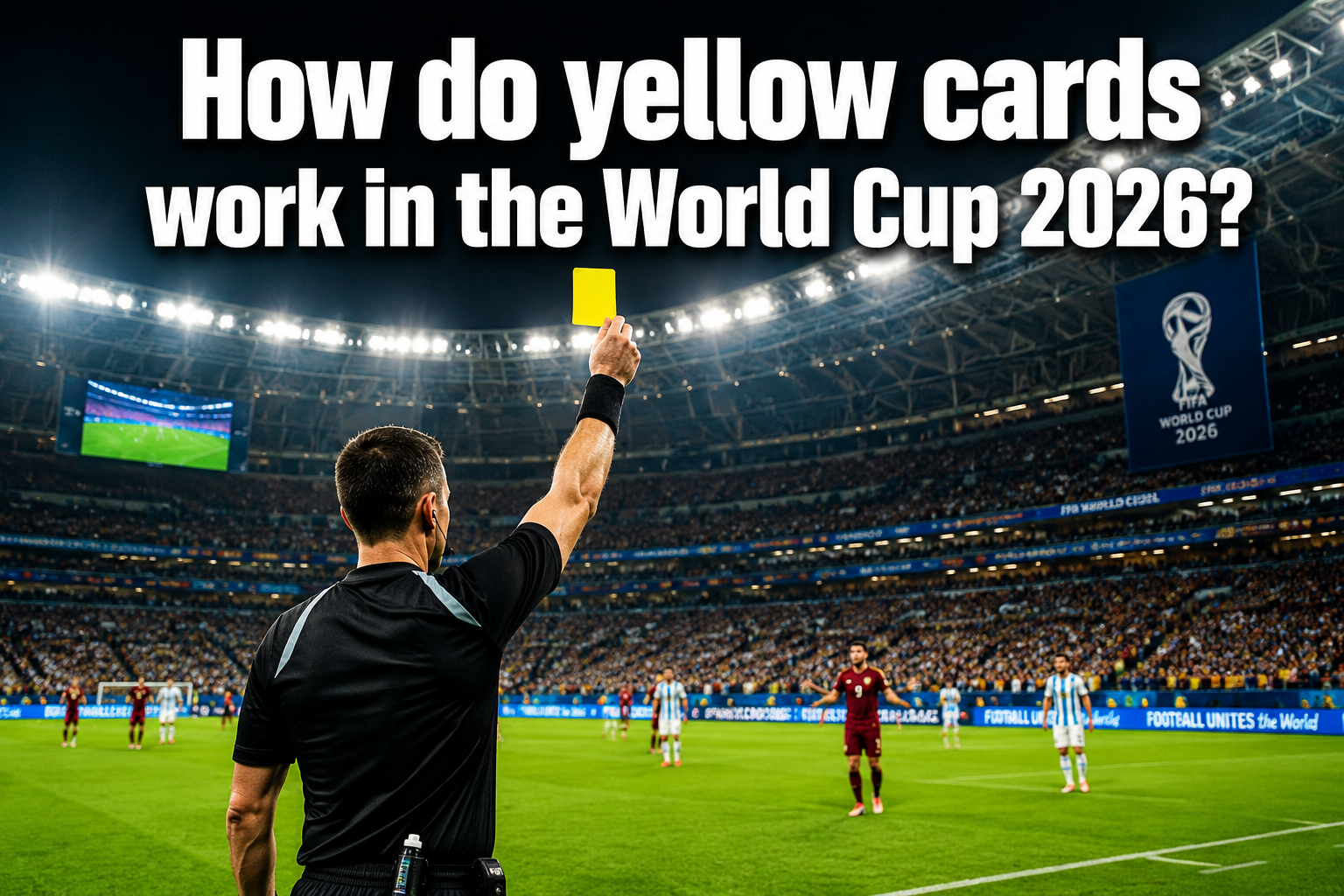
Yellow Cards Work in the World Cup 2026
- Two yellow cards in one match equals automatic ejection with a red card
- Players can continue playing immediately after receiving one yellow card
- Yellow cards accumulate across matches until specific reset points in the tournament
- Two accumulated yellow cards result in a one-match suspension
- Common yellow card offenses include unsporting behavior, dissent, and tactical fouls
- Yellow card suspensions cannot be appealed, unlike some red card incidents
- Cards received in semifinals do not carry over to the final match
- Goalkeepers and outfield players face identical yellow card rules
What Is a Yellow Card in Soccer?
A yellow card is an official caution issued by the referee to warn players for misconduct that doesn’t warrant immediate ejection from the match. The card serves as both a disciplinary tool and a visual signal to players, coaches, and spectators that a rule violation has occurred.
FIFA introduced the yellow card system in 1970 to create a universal language for referees that transcends linguistic barriers. The bright yellow color was specifically chosen for maximum visibility under stadium lighting conditions. In World Cup 2026, referees will use the same standardized yellow card system that governs professional soccer worldwide.
Key characteristics of yellow cards:
- Immediate caution with no game stoppage beyond the booking process
- Player remains on the field unless it’s their second yellow card
- Recorded in the official match report for potential future consequences
- Cannot be reversed once shown, except in cases of mistaken identity
How Many Yellow Cards Before You Get Sent Off World Cup?
Two yellow cards in a single match result in automatic ejection from that game. When a player receives their second yellow card, the referee immediately shows a red card and the player must leave the field permanently.
This “double yellow equals red” rule applies regardless of timing within the match. A player could receive their first yellow card in the 5th minute and their second in the 90th minute, still resulting in ejection. The sending-off carries additional consequences beyond just missing the remainder of that specific match.
Ejection process for two yellow cards:
- Referee shows the second yellow card
- Referee immediately displays the red card
- Player must leave the field and cannot return
- Team continues with 10 players (no substitution allowed for the ejected player)
- Automatic one-match suspension for the next game
Choose this rule understanding if you’re tracking player availability – any player on one yellow card faces significant risk of missing subsequent matches through ejection.
Can You Play After Getting a Yellow Card?
Yes, players continue playing immediately after receiving one yellow card with no restrictions on their participation. The yellow card serves as a warning rather than a punishment that affects current gameplay.
However, players typically modify their playing style after receiving a yellow card to avoid a second caution. Coaches often substitute players who are “walking a tightrope” on one yellow card, especially during crucial matches where the risk of ejection outweighs the player’s continued participation.
What happens after one yellow card:
- Player remains on field with full participation rights
- No time penalties or restricted movement
- Increased scrutiny from referees for subsequent actions
- Strategic considerations for coaches regarding substitutions
- Psychological pressure to avoid risky challenges or dissent
The World Cup 2026 bracket format creates additional pressure, as single-elimination knockout rounds make yellow card management even more critical for team strategy.
What Happens If You Get 2 Yellow Cards in One Match?
Two yellow cards in one match trigger an immediate red card and ejection, plus an automatic one-match suspension for the player’s next game. This suspension applies regardless of whether the next match is in the group stage, knockout rounds, or even the final.
The ejected player cannot be replaced by a substitute, forcing their team to continue with 10 players. This numerical disadvantage often proves decisive in tight World Cup matches where every player’s contribution matters significantly.
Immediate consequences:
- Player leaves the field permanently
- Team plays short-handed for remaining time
- No substitution allowed to replace ejected player
- Automatic suspension for next match
- Potential additional disciplinary review by FIFA
Example scenario: If a player receives two yellow cards in a quarterfinal match, they miss the semifinal entirely. Their team must adjust tactics and lineup for one of the tournament’s most important games.
Do Yellow Cards Carry Over Between World Cup Matches?
Yes, yellow cards accumulate across World Cup 2026 matches until specific reset points in the tournament. Players face suspension after collecting two yellow cards in separate matches, creating ongoing consequences that extend beyond individual games.
The accumulation system means a player who receives one yellow card in their first group match and another in their second group match will miss the third group match due to suspension. This system encourages consistent fair play throughout the tournament rather than just within single matches.
Yellow card reset schedule for World Cup 2026:
- Group stage: Cards accumulate across all three matches
- Round of 16: Previous cards still count toward suspension
- Quarterfinals: Previous cards still count
- Reset point: After quarterfinals, yellow card counts reset to zero
- Semifinals: Fresh start with no previous card consequences
- Final: Only cards from semifinals count
This reset system ensures that players reaching the final aren’t suspended due to cards accumulated weeks earlier in group play. For detailed suspension rules, see our comprehensive guide to FIFA World Cup 2026 yellow red card rules suspensions.
What Fouls Result in a Yellow Card?
Referees issue yellow cards for seven specific categories of misconduct defined by FIFA’s Laws of the Game. Understanding these categories helps predict when players might face cautions during World Cup 2026 matches.
The seven yellow card offenses:
- Unsporting behavior – Simulation (diving), deliberate handballs, time-wasting
- Dissent by word or action – Arguing with referees, sarcastic applause, throwing equipment
- Persistent fouling – Repeated minor infractions that disrupt game flow
- Delaying the restart of play – Slow throw-ins, blocking free kicks, excessive celebration
- Failing to respect required distance – Not retreating 10 yards from free kicks
- Entering or leaving the field without permission – Unauthorized substitutions, leaving during play
- Entering the field as a substitute – Coming on before being beckoned by the referee
Common tactical yellow cards include:
- Professional fouls to stop promising attacks
- Deliberate shirt-pulling or holding
- Kicking the ball away after the whistle
- Excessive celebration that delays restart
Referees show more yellow cards during World Cup matches due to increased intensity and tactical fouling as teams attempt to gain competitive advantages.
Yellow Card Suspension Rules World Cup 2026
The suspension system for accumulated yellow cards follows a progressive structure designed to maintain competitive balance while deterring persistent misconduct. Players face increasing consequences as they accumulate cards throughout the tournament.
Suspension thresholds:
- 2 yellow cards = 1 match suspension
- 4 yellow cards = 2 match suspension (rarely reached due to tournament length)
- Cards reset after quarterfinals to prevent final suspensions from early tournament actions
Players serving yellow card suspensions cannot participate in any capacity during the suspended match – they cannot sit on the bench, warm up with the team, or enter the technical area. The suspension affects only the immediate next match, not multiple games unless specifically stated.
Strategic implications:
- Coaches may rest players on one yellow card during less crucial group matches
- Teams often adjust tactics when key players face suspension risk
- Substitution timing becomes critical for players approaching two cards
The FIFA World Cup 2026 schedule shows the compressed timeline that makes yellow card management particularly challenging for teams advancing deep into the tournament.
Difference Between Yellow and Red Card Soccer
Yellow and red cards represent different severity levels of misconduct, with distinct immediate and future consequences. While yellow cards serve as warnings, red cards result in immediate ejection and typically longer suspensions.
Yellow card characteristics:
- Warning for misconduct
- Player continues in current match
- Accumulation leads to future suspensions
- Cannot be appealed or overturned
Red card characteristics:
- Immediate ejection from current match
- Automatic minimum one-match suspension
- Direct red cards often carry longer suspensions
- May be appealable depending on the offense
Direct red card offenses include:
- Serious foul play with excessive force
- Violent conduct against opponents or officials
- Spitting at opponents or match officials
- Denying obvious goalscoring opportunities through handballs or fouls
- Using offensive, insulting, or abusive language
- Receiving two yellow cards in one match
Red cards carry more severe consequences, with some offenses resulting in multi-match suspensions that can end a player’s World Cup participation entirely.
Can a Player Be Banned for Accumulating Yellow Cards?
Yes, players face automatic match bans after accumulating multiple yellow cards during World Cup 2026. The suspension system creates progressive penalties that increase with continued misconduct throughout the tournament.
The standard threshold requires two yellow cards for a one-match suspension, but FIFA reserves the right to impose additional disciplinary measures for players who consistently violate fair play standards. Repeated suspensions within the same tournament can trigger extended bans or fines.
Accumulation consequences:
- First suspension: One match for two yellow cards
- Continued accumulation: Potential additional disciplinary review
- Persistent offenders: Risk of tournament expulsion in extreme cases
Players cannot “serve” yellow card suspensions through red card suspensions – each disciplinary action carries separate consequences that must be completed independently.
What’s the Penalty for Getting a Yellow Card?
The immediate penalty for a single yellow card is minimal – players continue in the current match without restrictions. However, the cumulative effect creates significant strategic implications for both players and teams throughout the tournament.
Immediate penalties:
- Official caution recorded in match report
- Increased referee scrutiny for subsequent actions
- No game time or participation restrictions
Cumulative penalties:
- Risk of ejection if second yellow card occurs
- Contribution toward suspension threshold
- Strategic limitations on aggressive play style
The psychological impact often exceeds the formal penalty, as players must balance competitive intensity with disciplinary caution for the remainder of their participation.
How Long Does a Yellow Card Stay on Your Record?
Yellow cards remain on a player’s disciplinary record until the designated reset points during World Cup 2026. Unlike domestic league play where cards may reset monthly or seasonally, World Cup yellow cards follow the tournament’s specific timeline.
World Cup 2026 yellow card timeline:
- Group stage through quarterfinals: All cards accumulate
- Reset point: After quarterfinal completion
- Semifinals and final: Fresh disciplinary slate
This system ensures that players reaching the World Cup final aren’t suspended due to minor infractions from group stage matches played weeks earlier. The reset balances fair play enforcement with competitive integrity for the tournament’s most important matches.
Cards from World Cup 2026 do not carry over to players’ domestic club competitions or future international tournaments – each competition maintains separate disciplinary records.
Can Yellow Cards Be Appealed or Overturned?
No, yellow cards cannot be appealed or overturned once issued during World Cup 2026 matches. FIFA’s disciplinary regulations treat yellow cards as final referee decisions that stand regardless of subsequent video review or team protests.
This policy differs from red card situations, where teams can sometimes appeal direct red cards for serious foul play or violent conduct. The non-appealable nature of yellow cards reflects their role as subjective referee judgments about player conduct and game management.
Why yellow cards cannot be appealed:
- Subjective nature of cautionable offenses
- Referee discretion in game management
- Administrative efficiency during tournament play
- Consistent application across all matches
The only exception involves cases of mistaken identity, where referees accidentally show yellow cards to the wrong player. These situations can be corrected through official match reports, but the caution itself transfers to the correct player rather than being eliminated entirely.
Teams must accept yellow card decisions and adjust their tactical approach accordingly, making in-game discipline management a crucial skill for World Cup success.
Frequently Asked Questions
Can goalkeepers receive yellow cards?
Yes, goalkeepers face identical yellow card rules as outfield players. Common goalkeeper yellow cards include time-wasting, handling outside the penalty area, and dissent toward referees.
Do yellow cards from qualifying matches count toward World Cup suspensions?
No, World Cup 2026 yellow cards are separate from qualifying campaign cards. Players start the tournament with clean disciplinary records regardless of previous international match cautions.
What happens if a player gets a yellow card in the final?
Yellow cards in the final have no future consequences since it’s the tournament’s last match. However, two yellow cards still result in ejection from the final itself.
Can coaches receive yellow cards?
No, coaches receive different disciplinary measures. Referees can caution or dismiss coaching staff, but these actions don’t involve the physical yellow card system used for players.
Do yellow cards affect extra time and penalty shootouts?
Yes, yellow cards issued during regulation time carry into extra time. Players ejected during extra time cannot participate in penalty shootouts if the match reaches that stage.
How quickly must yellow card suspensions be served?
Suspensions must be served in the immediate next match for which the player would otherwise be eligible. Players cannot delay serving suspensions to more convenient fixtures.
What happens if multiple players from one team are suspended simultaneously?
Teams must field eligible players from their registered squad. If suspensions create lineup difficulties, teams cannot receive exemptions – they must adapt their tactical approach accordingly.
Do World Cup yellow cards affect FIFA rankings or player statistics?
Yellow cards are recorded in official FIFA statistics but don’t directly impact national team rankings. However, fair play records can influence tiebreaking procedures during group stage standings.
Can substitutes receive yellow cards while on the bench?
Yes, players on the bench can receive yellow cards for dissent, unsporting behavior, or other misconduct. These cards count toward their accumulation totals and suspension thresholds.
Are there different yellow card rules for different World Cup 2026 host countries?
No, FIFA applies identical yellow card rules across all World Cup 2026 venues in the United States, Canada, and Mexico. The rules remain consistent regardless of match location.
Do yellow cards reset between group stage and knockout rounds?
No, yellow cards accumulate from group stage through quarterfinals. The reset only occurs after quarterfinal completion, not between tournament phases.
Can VAR review yellow card decisions?
VAR cannot review yellow card decisions directly. However, if VAR identifies a more serious offense during review, referees can upgrade yellow cards to red cards for the same incident.
Conclusion
Understanding how do yellow cards work in the World Cup 2026 provides essential insight into tournament dynamics and player management strategies. The accumulation system creates ongoing consequences that extend far beyond individual matches, influencing team selection and tactical decisions throughout the competition.
Key points to remember: two yellow cards in one match trigger immediate ejection, cards accumulate until the quarterfinal reset point, and suspensions cannot be appealed once issued. Players and coaches must balance competitive intensity with disciplinary caution to maximize their tournament participation.
For fans following the tournament, tracking yellow card accumulations adds strategic depth to match viewing. Pay attention to players on one yellow card during crucial matches – their cautious play or potential ejection could dramatically shift game outcomes.
Stay informed about player availability and suspension news by following our comprehensive World Cup 2026 coverage throughout the tournament. Understanding these disciplinary rules enhances appreciation for the tactical complexity that makes World Cup soccer compelling at the highest level.