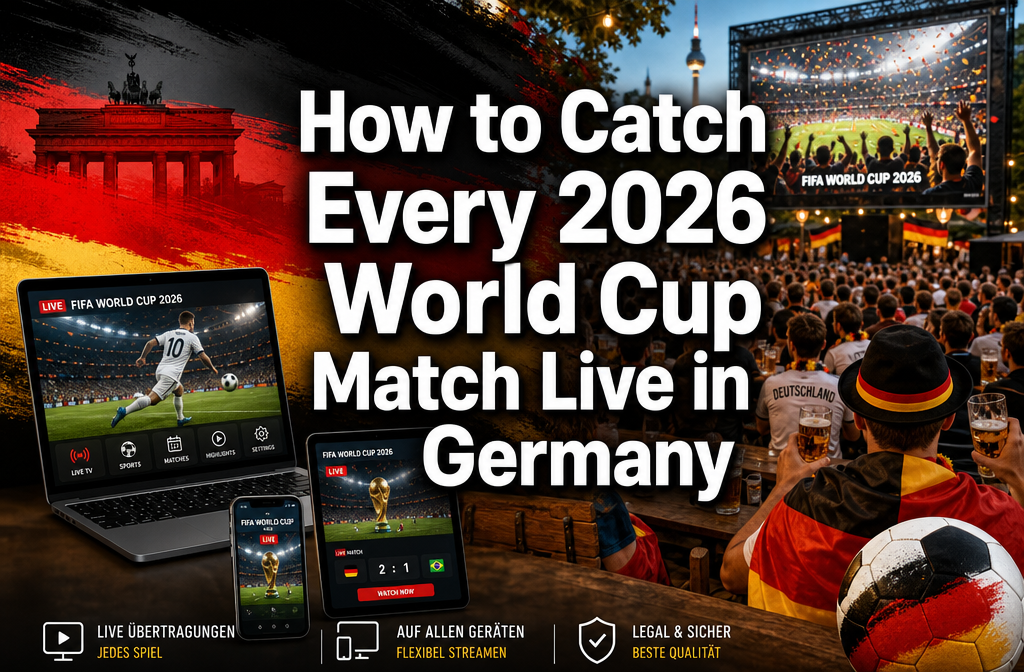
How to Catch Every 2026 World Cup Match Live in Germany
Fans in Germany can watch every 2026 World Cup match through a combination of public broadcasters ARD and ZDF (free-to-air), subscription streaming services like MagentaTV and DAZN, and cable/satellite providers that carry these channels. Most group stage and knockout matches will be split between ARD and ZDF, with premium platforms offering additional coverage options. Budget-conscious viewers can access approximately 40-48 matches for free through public television, while comprehensive coverage requires a streaming subscription ranging from 10-25 euros per month.
FIFA World Cup 2026 Germany Match Start Times
| Match | Date | Start Time UTC+6 |
|---|---|---|
| Germany vs 🇨🇼 Curaçao | 15 June 2026 | 11:00 PM |
| Germany vs 🇨🇮 Côte d’Ivoire | 21 June 2026 | 2:00 AM |
| Ecuador vs 🇩🇪 Germany | 26 June 2026 | 2:00 AM |
2026 FIFA World Cup Match Live in Germany
- ARD and ZDF will broadcast the majority of 2026 World Cup matches free-to-air, covering all German national team games and most knockout rounds
- MagentaTV Sport and DAZN hold supplementary streaming rights, offering every match live with additional features like multi-camera angles and match replays
- Streaming subscriptions cost between 10-25 euros monthly, with some providers offering tournament-specific packages
- A minimum internet speed of 10 Mbps is recommended for HD streaming, though 25 Mbps ensures buffer-free viewing during peak times
- Public viewing events will take place in major German cities, offering free large-screen experiences in fan zones and beer gardens
- Cord-cutters can access all matches through streaming-only platforms without traditional cable subscriptions
- VPN services allow access to international broadcasts, though this may violate terms of service for some platforms
What TV Channels Will Broadcast the 2026 FIFA World Cup in Germany
ARD and ZDF, Germany’s public broadcasting networks, will share coverage of the 2026 World Cup as they have for previous tournaments. These channels are available free-to-air to all German households with a television and valid Rundfunkbeitrag (broadcasting contribution). The two networks typically alternate match coverage, with ARD broadcasting on one day and ZDF the next during group stages.
Both broadcasters will prioritize matches involving the German national team, high-profile matchups between traditional football powers, and all knockout stage games from the round of 16 onwards. Combined, ARD and ZDF are expected to show between 40 and 48 of the tournament’s 104 matches live.
For comprehensive coverage of every single match, viewers need access to premium sports channels. MagentaTV Sport (operated by Deutsche Telekom) and DAZN have secured rights to broadcast all 104 matches, including those not shown on public television. These platforms will simulcast the ARD/ZDF games while also providing exclusive coverage of matches the public broadcasters don’t air.
Sky Sport may also carry select matches through sub-licensing agreements, though their role in 2026 World Cup coverage is more limited compared to previous tournaments. Traditional cable and satellite providers like Vodafone, 1&1, and Unitymedia typically bundle these sports channels into their premium packages.
For a complete viewing experience, the combination of free public broadcasting plus one premium streaming service ensures access to every match. Viewers interested in learning about FIFA World Cup 2026 TV coverage across different regions can compare international broadcasting options.
How Much Do World Cup Streaming Subscriptions Cost in Germany
Streaming subscriptions for complete 2026 World Cup coverage in Germany range from 10 to 25 euros per month, depending on the platform and package selected. MagentaTV Sport offers its sports package at approximately 10 euros monthly for existing Telekom customers, while standalone subscriptions cost around 16.95 euros per month. This package includes all World Cup matches plus Bundesliga and other football competitions.
DAZN pricing varies based on subscription length. Monthly plans typically cost 24.99 euros with no contract commitment, while annual subscriptions reduce the effective monthly cost to approximately 19.99 euros. DAZN frequently offers tournament-specific promotions, so checking for World Cup packages in the weeks before the tournament begins can yield better rates.
Some providers offer pay-per-view options for individual matches or match-day passes, usually priced between 3.99 and 9.99 euros per game. This approach works for casual viewers who only want to watch specific high-stakes matches without committing to a full month’s subscription.
Student discounts are available through some platforms. DAZN occasionally runs promotions offering 20-30% off for verified students, while university partnerships may provide temporary access through campus networks.
Budget-conscious fans should note that timing matters. Subscribing for just the tournament month (June-July 2026) and canceling before auto-renewal can minimize costs. Most streaming platforms allow immediate cancellation while maintaining access through the paid period, preventing unwanted charges.
Compared to cable sports packages that often exceed 30-40 euros monthly, streaming-only options provide significant savings. For those exploring World Cup 2026 live streaming without cable, these digital-first platforms offer the most cost-effective solution.
Can I Watch Every Match for Free Online
Watching every 2026 World Cup match completely free is not possible through legal channels in Germany. ARD and ZDF will broadcast 40-48 matches at no additional cost beyond the mandatory Rundfunkbeitrag (approximately 18.36 euros monthly per household, which funds all public broadcasting). This fee is required regardless of World Cup viewing, so it doesn’t represent an extra tournament expense.
The remaining 56-64 matches require paid subscriptions to platforms like MagentaTV Sport or DAZN. No legitimate German streaming service offers all 104 matches without charge.
Free trial periods provide a limited workaround. DAZN and some competing platforms occasionally offer 7-day or 30-day free trials for new subscribers. Strategic timing of a trial to coincide with crucial tournament phases (such as the knockout rounds) can provide free access to matches not shown on public television. However, this approach only covers a portion of the tournament and requires cancellation before trial expiration to avoid charges.
Public libraries and community centers in some German cities provide free streaming access on public computers or in viewing rooms, though availability varies by location and demand is typically high during major tournaments.
Illegal streaming sites that claim to offer free World Cup coverage pose significant risks. These platforms often contain malware, provide unreliable streams that buffer or disconnect during crucial moments, and violate copyright laws. German authorities actively monitor and shut down illegal streaming operations, and users can face legal consequences.
For comprehensive free access, combining ARD/ZDF broadcasts with attendance at public viewing events (covered below) offers the best legal option, though it won’t include every match.
Which German Streaming Platforms Have World Cup Rights
Three primary streaming platforms hold 2026 World Cup broadcasting rights in Germany: MagentaTV Sport, DAZN, and the streaming services of ARD and ZDF.
MagentaTV Sport provides comprehensive coverage with all 104 matches available live and on-demand. The platform offers multi-device streaming, allowing simultaneous viewing on smartphones, tablets, computers, and smart TVs. MagentaTV’s interface includes features like match statistics, alternative commentary options, and the ability to start matches from the beginning even if you join late.
DAZN similarly broadcasts every tournament match with additional features including tactical camera angles, condensed match replays (typically 20-30 minutes), and highlight packages available within hours of full-time. DAZN’s platform supports streaming on up to two devices simultaneously on standard plans.
ARD Mediathek and ZDF Mediathek are the public broadcasters’ streaming platforms, offering free live streams and replays of the matches they broadcast on television. These apps require no subscription or registration, though geographic restrictions limit access to users with German IP addresses. Both platforms support streaming on all major devices and provide excellent stream quality with minimal buffering.
Amazon Prime Video and RTL+ do not hold primary World Cup rights for 2026, though this could change through last-minute sub-licensing deals. Checking these platforms closer to the tournament start date is advisable.
For German viewers, the decision between MagentaTV Sport and DAZN often comes down to existing subscriptions and device preferences. MagentaTV integrates seamlessly with Telekom’s internet and TV services, while DAZN offers broader international sports content beyond the World Cup.
Fans can explore general FIFA World Cup 2026 live stream options to understand how German coverage compares to other countries.
What Internet Speed Do I Need to Stream World Cup Matches
A minimum internet connection speed of 10 Mbps (megabits per second) is required for standard definition (SD) streaming of World Cup matches without significant buffering. For high definition (HD) streaming at 1080p resolution, which most platforms default to, 25 Mbps provides a comfortable buffer against slowdowns during peak viewing times.
4K or Ultra HD streaming, offered by select platforms for premium subscribers, requires at least 50 Mbps for smooth playback. However, not all World Cup broadcasts will be available in 4K, and the difference in viewing experience on screens smaller than 55 inches is minimal for most viewers.
These speed requirements assume a single stream. Households with multiple people streaming simultaneously, downloading files, or using video conferencing during matches should add 10-25 Mbps per additional high-bandwidth activity. For example, a household where one person streams the World Cup in HD while another watches Netflix needs approximately 35-40 Mbps total.
Upload speed matters less for streaming consumption but becomes important if you’re hosting watch parties and sharing clips on social media in real-time. A minimum upload speed of 5 Mbps ensures smooth social media uploads and video calls.
Latency (ping time) affects how quickly your stream responds. For live sports, latency under 50 milliseconds is ideal, though most German broadband connections easily achieve this. Higher latency can result in your stream lagging 30-60 seconds behind live television, which becomes problematic if neighbors’ cheers spoil goals before you see them.
Common streaming problems during big soccer events include:
- Buffering during peak times: When millions watch simultaneously, even robust platforms can slow. This typically occurs during opening matches, host nation games, and finals.
- Resolution auto-downgrade: Platforms automatically reduce quality when detecting slow connections. Manually setting resolution to a lower quality at the start prevents mid-match switching.
- Connection drops: Brief internet outages are more noticeable during live sports. Having a mobile data backup (streaming via smartphone hotspot) provides continuity.
To test your connection before the tournament, use speed test websites like Speedtest.net during evening hours (when usage peaks) rather than midday (when results are artificially high). If your speed consistently falls below 25 Mbps, contact your internet service provider about upgrades or consider watching on public television instead of streaming.
Are There Public Viewing Events for World Cup Matches in German Cities
Major German cities will host extensive public viewing events throughout the 2026 World Cup, offering free large-screen viewing experiences in designated fan zones, beer gardens, and city squares. These events recreate the communal atmosphere that made the 2006 World Cup in Germany memorable, with capacity for thousands of spectators at the largest venues.
Berlin typically establishes its main fan zone at the Brandenburg Gate, with additional viewing areas in Tiergarten and various neighborhood squares. Capacity at the Brandenburg Gate fan zone often exceeds 20,000 viewers, with free entry on a first-come, first-served basis.
Munich centers its public viewing around Olympiapark and the city center, with traditional beer gardens like Hirschgarten and Augustiner also screening matches. Munich’s beer garden culture means most venues serve food and drinks at regular prices while providing free viewing.
Hamburg, Cologne, Frankfurt, and Dortmund similarly organize central fan zones with large LED screens, food vendors, and beer stands. These events typically run from late morning through evening, covering multiple matches per day during the group stage.
Smaller cities and towns often organize local viewing events in market squares or at sports clubs. These provide more intimate settings with easier access and shorter lines for facilities, though screen sizes are smaller.
Public viewing events show matches broadcast on ARD and ZDF, meaning approximately 40-48 of the tournament’s 104 matches will be available at these venues. Matches not shown on public television generally aren’t screened at public events due to licensing restrictions.
Advantages of public viewing:
- Completely free entry (no ticket or subscription required)
- Electric atmosphere with thousands of passionate fans
- No need for reliable home internet or streaming subscriptions
- Large screens provide excellent visibility even from a distance
Considerations:
- Arrive 1-2 hours early for popular matches (Germany games, finals) to secure good viewing positions
- Facilities (restrooms, food stands) experience long queues during halftime
- Weather-dependent; rain doesn’t cancel events but affects comfort
- Not all matches are shown; check schedules in advance
For those planning to combine home streaming with public viewing, checking how to watch World Cup 2026 live provides comprehensive options across different viewing methods.
Do German Sports Bars Show All World Cup Games
Most German sports bars and pubs will show World Cup matches broadcast on ARD and ZDF, but comprehensive coverage of all 104 matches is less common. Establishments typically prioritize matches with the highest viewer interest: German national team games, traditional football rivalries (Brazil vs. Argentina, England vs. France), and all knockout stage matches.
Bars with Sky Sport or DAZN subscriptions can show every match, but commercial licensing for these services costs significantly more than residential subscriptions. Smaller neighborhood pubs often can’t justify the expense for matches with lower expected attendance, such as early group stage games between non-European teams.
Sports bars in major cities like Berlin, Munich, Hamburg, and Cologne are more likely to offer comprehensive coverage. Chains like Stadion an der Schleißheimer Straße in Munich or Belushi’s locations across Germany typically invest in complete sports packages and advertise full tournament schedules.
Irish pubs and international sports bars often provide broader coverage than traditional German establishments, as their clientele includes expatriates and international fans seeking specific matches.
To confirm which matches a specific bar will show:
- Check the establishment’s website or social media pages, where many post tournament schedules
- Call ahead, especially for less prominent matches
- Visit during an early group stage match to ask about their full coverage plans
Reservation policies vary. Popular venues require reservations for Germany matches and finals, often with minimum spending requirements (typically 15-30 euros per person including food and drinks). Less prominent matches operate on a walk-in basis.
Advantages of sports bar viewing:
- Social atmosphere without massive public viewing crowds
- Food and drink service at your seat
- Indoor climate control
- Guaranteed seating if reserved
Disadvantages:
- Costs add up (expect 20-50 euros per match including drinks and food)
- Not all matches are shown
- Noise levels can make commentary difficult to hear
- Limited availability for popular matches without advance booking
For the best experience, identify 2-3 sports bars near you that advertise comprehensive World Cup coverage, then plan your viewing schedule around their confirmed broadcasts.
How Do I Set Up VPN to Watch International Broadcasts
A Virtual Private Network (VPN) allows German viewers to access World Cup broadcasts from other countries by masking their actual location and appearing to connect from a different nation. This enables watching matches through international streaming services that may offer different coverage, commentary languages, or viewing features than German platforms.
Basic VPN setup process:
Choose a reputable VPN service: NordVPN, ExpressVPN, and Surfshark are established providers with servers in multiple countries. Monthly costs range from 8-12 euros, with discounts for longer commitments.
Install the VPN application: Download the provider’s app for your device (Windows, Mac, iOS, Android, or smart TV). Most services allow 5-6 simultaneous device connections.
Select a server location: Connect to a VPN server in the country whose broadcast you want to access. For example, connecting to a UK server allows access to BBC iPlayer, while a Canadian server enables CBC streaming.
Access the streaming platform: Once connected, visit the international broadcaster’s website or app. You should now appear as a local user in that country.
Create an account if required: Some international platforms require account registration. Use a temporary email service if you prefer not to provide personal information.
Important legal and practical considerations:
Most streaming platforms’ terms of service explicitly prohibit VPN usage to circumvent geographic restrictions. While using a VPN isn’t illegal in Germany, violating a platform’s terms of service can result in account suspension or termination. Platforms increasingly detect and block VPN traffic, requiring users to switch servers frequently.
Streaming quality through VPNs often degrades compared to direct connections. The additional routing through VPN servers can increase latency and reduce bandwidth, potentially causing buffering during live matches. Choosing VPN servers geographically close to Germany (UK, France, Netherlands) minimizes this impact.
Payment barriers exist for some international services. Platforms like US-based services may require payment methods with billing addresses in that country, making access difficult even with a VPN.
Better alternatives to VPN usage:
- Stick with legal German platforms (ARD, ZDF, MagentaTV, DAZN) that provide excellent coverage
- Use VPNs only to access free international broadcasts (like BBC iPlayer) rather than circumventing paid services
- Consider that German commentary and analysis are among the best in world football
For fans exploring international options, reviewing how other countries stream the World Cup provides context on what different regions offer, though German coverage already ranks among the most comprehensive globally.
What Are the Best Ways to Watch If I Don’t Have Cable
Cord-cutters in Germany can access complete 2026 World Cup coverage without traditional cable or satellite subscriptions through several streaming-only options. This approach often costs less than bundled cable packages while providing greater flexibility.
Streaming-only platforms:
DAZN operates entirely without cable infrastructure, offering all 104 World Cup matches through internet streaming alone. No television receiver, satellite dish, or cable box is required—just an internet connection and a compatible device (smartphone, tablet, computer, smart TV, or streaming stick).
MagentaTV offers a streaming-only option separate from Telekom’s traditional TV service. The “MagentaTV Smart” package provides app-based access without requiring Telekom internet service, though pricing is slightly higher for non-Telekom customers.
ARD and ZDF Mediathek apps provide free streaming of public broadcast matches on any internet-connected device. These require no subscription, registration, or cable connection whatsoever.
Device options for streaming without cable:
- Smart TVs: Modern televisions with built-in apps for DAZN, MagentaTV, and public broadcaster mediatheks
- Streaming sticks: Amazon Fire TV Stick, Google Chromecast, or Apple TV connect to any HDMI television and run streaming apps
- Gaming consoles: PlayStation and Xbox support major streaming apps
- Laptops/tablets: Connect to televisions via HDMI cable for larger screen viewing
- Smartphones: Cast to smart TVs using built-in casting features
Cost comparison:
Traditional cable sports packages in Germany cost 30-50 euros monthly with annual contracts. Streaming-only World Cup access through DAZN (24.99 euros/month, no contract) or MagentaTV Sport (16.95 euros/month standalone) combined with free ARD/ZDF coverage costs significantly less, especially when subscribing only for the tournament duration.
Setup requirements:
- Reliable internet connection (25 Mbps minimum, as discussed earlier)
- Compatible streaming device (likely already owned)
- Subscription to one premium platform (DAZN or MagentaTV) for complete coverage
- Public broadcaster apps (free) for additional matches
Advantages of cord-cutting for World Cup viewing:
- Lower monthly costs with no annual contracts
- Cancel anytime after the tournament ends
- Watch on multiple devices throughout your home
- No installation appointments or equipment rentals
Potential challenges:
- Requires stable internet (problematic in areas with poor broadband)
- Slight delay (30-60 seconds) compared to traditional television
- Learning curve for older viewers unfamiliar with streaming apps
For comprehensive guidance, exploring World Cup 2026 live streaming without cable options provides additional strategies and platform comparisons.
Which Matches Will Be Most Difficult to Stream Live
Certain 2026 World Cup matches will present streaming challenges due to timing, technical demand, or access restrictions. Understanding these potential difficulties allows viewers to plan alternative viewing methods.
Opening match and tournament final generate the highest simultaneous viewership, often overwhelming streaming platforms even with robust infrastructure. The opening match on June 11, 2026, and the final on July 19, 2026, historically cause buffering and connection issues across all streaming services. For these matches, traditional television broadcasts on ARD or ZDF provide more reliable viewing than streaming platforms.
German national team matches create similar demand spikes, particularly if Germany advances deep into the knockout stages. Streaming platforms may struggle during these peak-demand periods, while ARD and ZDF’s broadcast infrastructure handles the load more effectively.
Matches scheduled during German working hours (typically 3:00 PM to 6:00 PM Central European Time) face challenges from workplace network restrictions. Many German companies block streaming services on corporate networks, making it difficult for employees to watch during lunch breaks or late afternoon. Mobile data streaming via personal smartphones provides a workaround, though data caps may apply.
Early morning matches (starting before 6:00 AM CET) accommodate North American time zones where the tournament takes place. While these matches face less streaming congestion, they require waking early or staying up overnight. Streaming platforms’ replay features become valuable here, allowing viewing at convenient times, though avoiding spoilers becomes challenging.
Simultaneous group stage matches during the final round of group play present a different challenge. FIFA schedules the last two matches in each group simultaneously to prevent competitive manipulation. Fans wanting to watch both matches need either:
- Two devices with separate streams
- Platforms offering split-screen or multi-view features
- Quick switching between streams, missing portions of each match
Geo-restricted content affects German viewers traveling abroad during the tournament. ARD, ZDF, and German streaming platforms typically block access from foreign IP addresses due to licensing restrictions. Travelers need VPN services (with the considerations mentioned earlier) or must rely on local broadcasts in their temporary location.
Mobile streaming during commutes can be unreliable in areas with poor cellular coverage, particularly on regional trains or in rural areas. Downloading matches for offline viewing isn’t available for live sports, making real-time mobile viewing dependent on consistent connectivity.
Solutions for difficult-to-stream matches:
- Default to ARD/ZDF television broadcasts for highest-demand matches
- Test streaming platforms during early group stage matches to identify reliability
- Have backup viewing options (television, mobile data, public viewing) ready for crucial matches
- Use streaming platforms’ replay features for inconveniently timed matches
- Consider attending public viewing events for matches that coincide with streaming difficulties
Are There Student or Budget-Friendly World Cup Viewing Options
Students and budget-conscious fans in Germany have several cost-effective options for watching the 2026 World Cup without sacrificing comprehensive coverage.
Free options:
ARD and ZDF provide 40-48 matches at no cost beyond the standard Rundfunkbeitrag, which students living in shared accommodations often split among roommates (reducing individual cost to 5-10 euros monthly). Students in university dormitories may have this fee covered through housing costs.
Public viewing events offer completely free access to matches shown on public television. Student groups often organize watch parties in university common areas, cafeterias, or student union buildings with large-screen projections.
University sports facilities sometimes provide free viewing in gymnasiums or auditoriums during major tournaments, creating campus community events around popular matches.
Low-cost streaming options:
Student discounts on DAZN occasionally reduce monthly costs by 20-30%. Check DAZN’s website for current student promotions, which typically require verification through services like UNiDAYS or Student Beans.
Shared subscriptions allow multiple people to split costs. DAZN permits two simultaneous streams, making it possible for roommates to share one account (12.50 euros per person for a monthly subscription split two ways). MagentaTV allows four simultaneous streams on family plans, enabling even greater cost-sharing.
Short-term subscriptions minimize expenses. Subscribing only for June and July 2026 (approximately 50 euros total for two months of DAZN) then canceling before August avoids year-round costs. Setting calendar reminders prevents forgetting to cancel.
Free trial timing provides 7-30 days of free access if timed strategically. Starting a DAZN free trial on June 25 (just before knockout stages begin) provides free access through the most exciting tournament phase.
Sports bar group outings distribute costs socially. Gathering 4-5 friends at a sports bar and splitting a table’s minimum spending requirement (typically 60-100 euros total) costs 12-20 euros per person for several hours of entertainment including food and drinks.
Budget planning example:
- Free ARD/ZDF matches: 0 euros additional cost
- One month DAZN subscription (split with roommate): 12.50 euros
- Two sports bar visits for Germany matches: 40 euros
- Total tournament cost: 52.50 euros
This provides access to all matches of interest while maintaining social viewing experiences.
Money-saving mistakes to avoid:
- Don’t subscribe to multiple platforms; one premium service plus free public broadcasting covers everything
- Avoid pay-per-view for individual matches; monthly subscriptions offer better value
- Don’t forget to cancel subscriptions; set reminders immediately after subscribing
- Avoid illegal streams that risk malware and legal consequences
Students can also explore comprehensive World Cup viewing guides that cover scheduling and planning strategies to maximize free and low-cost viewing opportunities.
How Can I Make Sure I Don’t Miss Any Key Matches
Ensuring you catch every important 2026 World Cup match requires advance planning, schedule awareness, and backup viewing options. The tournament’s 104 matches over 39 days create numerous opportunities for conflicts with work, travel, or other commitments.
Download the official schedule:
FIFA provides detailed match schedules showing dates, times (in local and CET), venues, and broadcasting information. Download this schedule as soon as it’s released and add key matches to your digital calendar with alerts. The FIFA World Cup 2026 schedule provides comprehensive timing information.
Identify must-watch matches:
- All German national team games (typically 3-7 matches depending on tournament progression)
- Opening match (June 11, 2026)
- Round of 16, quarterfinals, semifinals, and final
- Rivalry matches (Brazil vs. Argentina, England vs. Scotland, etc.)
- Final group stage matchdays when qualification is decided
Set up notifications:
Streaming platforms like DAZN and MagentaTV offer push notifications for match starts, goals, and key moments. Enable these for matches you might miss live. ARD and ZDF apps provide similar alert features.
Use DVR and replay features:
Most streaming platforms allow pausing live matches and starting from the beginning even if you join late. MagentaTV and DAZN keep full match replays available for 24-48 hours after conclusion, enabling time-shifted viewing if you can avoid spoilers.
Coordinate with work:
- Request time off for crucial matches, particularly if Germany reaches later knockout stages
- Arrange flexible lunch breaks to watch afternoon matches
- Discuss with colleagues about streaming in break rooms during less busy work periods
Avoid spoilers:
- Mute sports-related accounts on social media during matches you plan to watch delayed
- Use browser extensions like “Spoiler Protection 2.0” that hide sports scores
- Ask friends and family not to discuss results until you’ve confirmed you’ve watched
- Avoid news websites and radio that report results immediately
Create backup plans:
For matches that conflict with unmovable commitments, establish secondary viewing methods:
- Record on traditional television if available
- Have a friend or family member stream and record on their device
- Use streaming platform replay features within 24 hours
- Watch condensed match highlights (20-30 minutes) if full replays aren’t possible
Tournament progression tracking:
Create a bracket showing tournament progression. Understanding that the round of 16 begins June 30, quarterfinals July 6-7, semifinals July 13-14, and final July 19 helps plan around these critical dates well in advance.
Coordinate social viewing:
For matches you want to watch with friends, establish plans early. Popular venues and private gathering spaces book quickly for knockout stage matches, particularly those involving Germany.
Frequently Asked Questions
Can I watch World Cup matches on my smartphone?
Yes, all major German streaming platforms (DAZN, MagentaTV, ARD Mediathek, ZDF Mediathek) offer mobile apps for iOS and Android. Matches stream in HD quality on smartphones with adequate data connections, though watching full 90-minute matches consumes approximately 1.5-2 GB of mobile data. Connect to Wi-Fi when possible to avoid exceeding data caps.
Will ARD and ZDF show all Germany matches?
Yes, German public broadcasters have priority rights for all German national team matches and will broadcast every game involving Germany free-to-air. This includes group stage matches, knockout rounds, and the final if Germany advances that far.
Can I watch matches in English commentary?
DAZN typically offers multiple audio tracks including English commentary for major matches. MagentaTV primarily provides German commentary. International streaming platforms accessed through VPN may offer English, Spanish, or other language options depending on the country’s broadcast.
What happens if my internet goes out during a match?
If your internet connection drops during live streaming, you’ll lose access until service restores. Having a backup option like traditional television or mobile data hotspot prevents missing crucial moments. Most streaming platforms allow you to resume from where you left off once reconnected.
Do streaming platforms work on older smart TVs?
Compatibility varies by TV model and manufacturing year. Smart TVs from 2018 or newer typically support current versions of DAZN and MagentaTV apps. Older models may require external streaming devices like Amazon Fire TV Stick or Google Chromecast, which cost 30-50 euros and plug into any HDMI port.
Can I share my streaming account with family in different cities?
Terms of service vary by platform. DAZN allows two simultaneous streams, which can be in different locations. MagentaTV’s policies are more restrictive, typically requiring streams to originate from the same household. Violating these terms risks account suspension.
Will public viewing events serve alcohol?
Most public viewing events in German cities include beer stands and alcohol service, as these events often partner with breweries and beverage companies. However, some family-oriented events in smaller towns may be alcohol-free. Check specific event details in advance.
How long after matches end are replays available?
DAZN typically makes full match replays available within 30 minutes of the final whistle and keeps them accessible for 48 hours. MagentaTV offers similar replay windows. ARD and ZDF Mediathek keep matches available for 7 days after broadcast due to licensing agreements.
Can I download matches to watch offline later?
No German streaming platform currently allows downloading World Cup matches for offline viewing due to licensing restrictions. Live sports content must be streamed in real-time or watched through time-limited replay features while connected to the internet.
What should I do if streaming quality is poor?
First, test your internet speed to ensure it meets minimum requirements (25 Mbps for HD). Close other applications using bandwidth, move closer to your Wi-Fi router, or connect via Ethernet cable for more stable connections. If problems persist, manually lower the stream quality in the app settings to reduce buffering.
Are there family packages for streaming services?
MagentaTV offers family plans that allow up to four simultaneous streams, making them cost-effective for households with multiple viewers. DAZN’s standard plan includes two simultaneous streams. Both platforms allow creating multiple user profiles under one account.
Will matches be available in 4K resolution?
Select matches on premium streaming platforms may be available in 4K/Ultra HD, though this hasn’t been confirmed for all 104 matches. 4K streaming requires 50 Mbps internet speeds and 4K-compatible displays. Most viewers find HD (1080p) provides excellent quality without the bandwidth demands of 4K.
Conclusion
Catching every 2026 World Cup match live in Germany combines free public broadcasting with affordable streaming options, offering flexibility for every budget and viewing preference. ARD and ZDF provide excellent free coverage of the tournament’s most important matches, while platforms like DAZN and MagentaTV ensure comprehensive access to all 104 games for viewers wanting complete coverage.
The key to a successful viewing experience lies in planning ahead: test your internet connection, decide which matches matter most, and establish backup viewing methods for high-demand games. Whether you choose the communal atmosphere of public viewing events, the convenience of home streaming, or the social experience of sports bars, Germany’s broadcasting infrastructure ensures you won’t miss the action.
Take action now by bookmarking the official World Cup 2026 schedule, comparing streaming platform prices, and identifying which free matches on ARD and ZDF align with your interests. Set calendar reminders for subscription timing to maximize free trials and minimize costs. With proper preparation, you’ll experience every goal, save, and dramatic moment of football’s greatest tournament without breaking the bank or missing crucial matches due to technical difficulties.