How to Watch 2026 World Cup in Ecuador: Full Broadcast Details
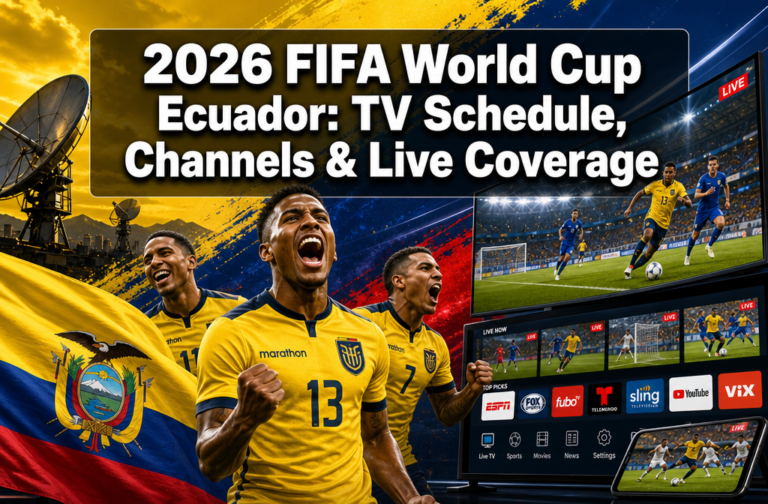
Football fans in Ecuador can watch the 2026 World Cup through multiple channels including DirecTV Sports, ECDF (Ecuavisa), and various streaming platforms like Star Plus and DirecTV Go. Traditional cable packages range from $25-60 per month, while streaming-only options start at $15 monthly. All 104 matches will be broadcast with Spanish commentary, with kickoff times adjusted for Ecuador’s ECT time zone (typically 5-7 hours behind host venues in the United States, Canada, and Mexico).
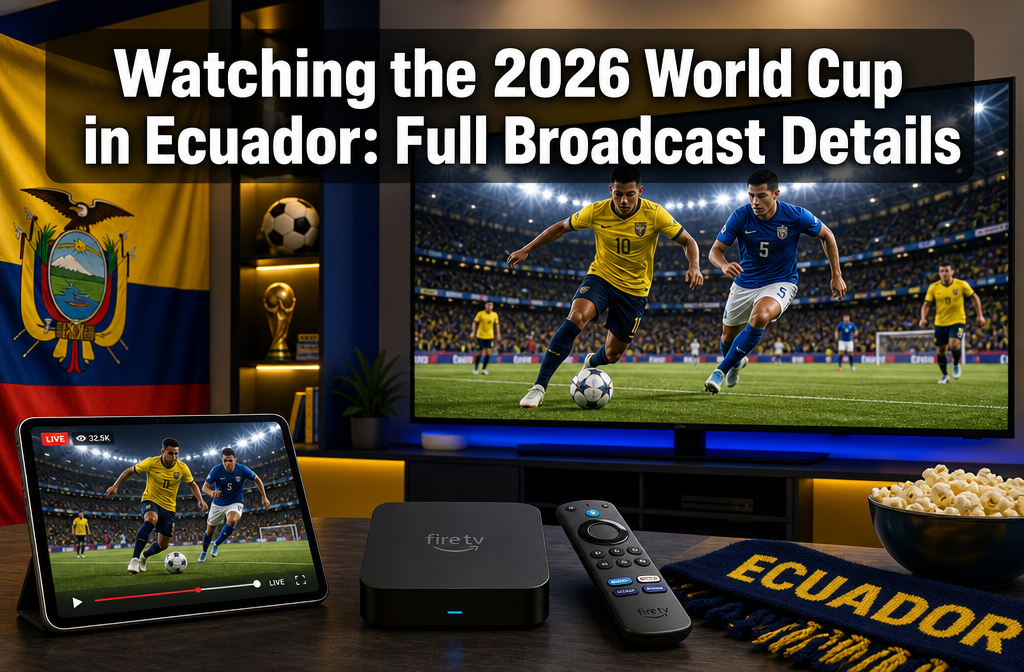
2026 World Cup in Ecuador
- DirecTV Sports and ECDF hold primary broadcasting rights for World Cup 2026 in Ecuador
- Cable packages with sports channels cost between $25-60 monthly depending on the provider
- Streaming services like Star Plus, DirecTV Go, and Zapping offer flexible online viewing options starting at $15/month
- Ecuador operates on ECT (UTC-5), meaning most matches air between 11 AM and 8 PM local time
- Free-to-air broadcasts will be available on select ECDF channels for Ecuador national team matches
- Major cities like Quito, Guayaquil, and Cuenca offer public viewing events and sports bar screenings
- Reliable internet speeds of at least 10 Mbps are recommended for HD streaming without buffering
- VPN services may be restricted by some platforms, potentially blocking access if detected
What TV Channels Will Broadcast World Cup 2026 in Ecuador
DirecTV Sports and ECDF (Ecuadorian Corporation of Radio and Television) will serve as the primary broadcasters for the 2026 World Cup in Ecuador. DirecTV Sports holds exclusive rights to most matches through its cable and satellite networks, while ECDF will broadcast select games including all Ecuador national team matches on free-to-air television.
Primary Broadcasting Channels:
- DirecTV Sports (Channels 610-619): Complete tournament coverage with multiple simultaneous match options
- ECDF/Ecuavisa (Channel 2): Free-to-air coverage of Ecuador matches and select high-profile games
- TC Televisión (Channel 10): Secondary free-to-air option for major matches
- RTS (Channel 4): Regional coverage in Guayaquil and coastal areas
DirecTV Sports provides the most comprehensive coverage with dedicated channels for simultaneous matches during group stage play. Subscribers can access pre-match analysis, halftime shows, and post-game commentary in Spanish. ECDF’s free-to-air broadcasts make Ecuador’s matches accessible to viewers without cable subscriptions, though picture quality may vary by region and antenna strength.
Choose DirecTV Sports if you want guaranteed access to every match in HD quality. Opt for free-to-air ECDF channels if you primarily want to watch Ecuador’s games and major knockout matches without subscription costs.
How Much Do Cable Packages Cost to Watch World Cup Matches
Cable packages that include World Cup broadcasting channels in Ecuador range from $25 to $60 per month depending on the provider and tier selected. Basic packages with sports channels start around $25-35 monthly, while premium tiers with HD quality and additional sports content cost $45-60.
Cable Provider Pricing Breakdown:
| Provider | Basic Sports Package | Premium Sports Package | Installation Fee |
|---|---|---|---|
| DirecTV Ecuador | $28/month | $52/month | $40 one-time |
| CNT (National Telecom) | $25/month | $45/month | Free |
| Claro TV | $32/month | $58/month | $35 one-time |
| Univisa | $30/month | $50/month | $25 one-time |
Most providers require 12-month contracts, though month-to-month options exist at 15-20% higher rates. Installation typically takes 3-5 business days after ordering. Premium packages include HD broadcasts, DVR functionality, and access to companion streaming apps for mobile viewing.
Common mistake: Many subscribers sign up for basic packages assuming they include all sports channels, only to discover DirecTV Sports requires the premium tier. Always verify channel lineups before committing to a contract.
For viewers interested in comparing international broadcast options, our guide on how to watch FIFA World Cup 2026 in other countries provides additional context.
Can I Stream World Cup Games Online From Ecuador
Yes, multiple streaming platforms offer legal World Cup access in Ecuador, including Star Plus, DirecTV Go, Zapping, and regional services. These platforms provide flexibility to watch on smartphones, tablets, smart TVs, and computers without traditional cable subscriptions.
Available Streaming Services:
Star Plus ($16.99/month): Disney-owned platform with extensive sports coverage including World Cup matches. Offers 4K streaming on compatible devices and allows two simultaneous streams per account.
DirecTV Go ($14.99-29.99/month): Digital-only version of DirecTV Sports without satellite installation. Three plan tiers offer varying channel selections and stream quality options.
Zapping ($12.99/month): Ecuadorian streaming service aggregating local and international channels. Includes ECDF content and select DirecTV Sports matches.
Flow ($18.99/month): Regional streaming platform available in Ecuador with sports package add-ons for comprehensive World Cup coverage.
All platforms require stable internet connections of at least 10 Mbps for HD streaming. Most offer 7-14 day free trials for new subscribers, allowing you to test service quality before the tournament begins. Mobile data streaming consumes approximately 1-3 GB per hour depending on quality settings.
Edge case: Viewers in rural areas with limited broadband may experience buffering issues. Download the match schedule in advance and consider watching at lower resolutions (480p uses 60% less data than 1080p) to maintain consistent playback.
Similar streaming options exist in neighboring countries, as detailed in our coverage of watching the World Cup in Brazil and Argentina.
Which Ecuadorian Cities Have the Best World Cup Viewing Experiences
Quito, Guayaquil, and Cuenca offer the most developed infrastructure for World Cup viewing, with numerous sports bars, public screenings, and reliable broadcast access. These cities feature high-speed internet availability, multiple cable provider options, and vibrant fan communities organizing viewing events.
City-by-City Breakdown:
Quito (Capital): Over 150 sports bars and restaurants with large-screen TVs, concentrated in La Mariscal, La Carolina, and Cumbayá neighborhoods. The city government typically organizes free public screenings in Parque Bicentenario and Plaza Foch for major matches. Internet speeds average 50-100 Mbps in urban areas.
Guayaquil (Largest City): Malecón 2000 hosts public viewing events with screens accommodating thousands of fans. The Samborondón district features upscale sports bars with premium viewing experiences. Coastal humidity can affect outdoor antenna reception for free-to-air broadcasts.
Cuenca (Cultural Hub): Smaller but passionate football community with 40+ sports bars in the historic center. Parque Calderón often features community screenings. Cable and fiber internet coverage reaches 85% of the metropolitan area.
Manta and Ambato: Growing cities with adequate viewing options but fewer public events and slightly lower internet reliability in peripheral neighborhoods.
Choose major cities if you want guaranteed access to public events and backup viewing locations. Smaller cities work well for home viewing but offer limited alternatives if your primary service experiences issues.
Are Streaming Services Like DirecTV Go Good for Watching Soccer
DirecTV Go and similar streaming platforms deliver reliable World Cup viewing in Ecuador, provided you have stable internet of at least 10 Mbps and compatible devices. These services offer advantages over traditional cable including no installation fees, month-to-month flexibility, and multi-device access.
Streaming Service Advantages:
- No equipment rental fees or installation appointments
- Watch on smartphones, tablets, laptops, and smart TVs simultaneously
- Pause, rewind, and replay functionality on most platforms
- Lower monthly costs compared to traditional cable packages
- Cancel anytime without early termination penalties
Streaming Service Limitations:
- Requires consistent internet connection (outages mean no access)
- 30-60 second broadcast delay compared to cable TV
- Data caps from ISPs may apply (tournament viewing can exceed 100 GB)
- Some platforms restrict VPN usage, limiting access while traveling
- Picture quality degrades automatically during network congestion
DirecTV Go specifically performs well during high-traffic sporting events, maintaining 1080p quality for most users with 25+ Mbps connections. Star Plus occasionally experiences server overload during simultaneous popular matches but generally recovers within minutes.
Decision rule: Choose streaming if you have reliable 25+ Mbps internet and want flexibility. Stick with cable if your internet is inconsistent or multiple household members will watch different matches simultaneously.
For viewers considering streaming options in host countries, check our guides for watching in the USA, Canada, and Mexico.
What Time Zone Differences Will Affect World Cup Match Viewing
Ecuador operates on ECT (Ecuador Time, UTC-5) year-round without daylight saving changes, placing most World Cup 2026 matches between 11 AM and 8 PM local time. Matches in the eastern United States will kick off 0-1 hours earlier than Ecuador time, while games on the west coast and Mexico start 2-3 hours later.
Time Zone Conversion Guide:
- Eastern US venues (New York, Boston, Miami): Same as Ecuador or 1 hour ahead
- Central US/Mexico venues (Dallas, Mexico City, Houston): 1-2 hours behind Ecuador
- Mountain/Pacific venues (Los Angeles, Vancouver, Denver): 2-3 hours behind Ecuador
Most group stage matches will kick off at 12 PM, 3 PM, 6 PM, and 9 PM in host venue local times. For Ecuador viewers, this translates to:
- Early matches: 11 AM – 1 PM ECT
- Afternoon matches: 2 PM – 4 PM ECT
- Evening matches: 5 PM – 7 PM ECT
- Late matches: 8 PM – 10 PM ECT (primarily west coast games)
Ecuador’s lack of daylight saving time simplifies scheduling since the time difference remains constant throughout the June-July tournament. This represents a significant advantage over European viewers who face early morning and overnight matches.
Practical tip: Download the official FIFA World Cup 2026 schedule converted to ECT to plan viewing around work and family commitments. Most Ecuador matches will likely be scheduled for prime viewing hours (3-6 PM ECT) to maximize domestic audience.
How Expensive Are World Cup Tickets in Ecuador
World Cup tickets are not sold in Ecuador since the tournament takes place in the United States, Canada, and Mexico. However, Ecuadorian fans can purchase tickets directly through FIFA’s official ticketing platform, with prices ranging from $50-500 USD per match depending on the venue, match importance, and seating category.
FIFA Ticketing Categories for 2026:
- Category 4 (lowest): $50-70 USD for group stage matches
- Category 3: $100-150 USD for group stage, $150-200 for knockout rounds
- Category 2: $200-300 USD for premium seating
- Category 1 (highest): $300-500 USD for best seats at important matches
Travel packages from Ecuadorian tour operators typically cost $2,500-6,000 USD per person including flights, accommodation, match tickets, and ground transportation. These packages target the estimated 15,000-25,000 Ecuadorian fans expected to travel if La Tri qualifies.
Additional costs for traveling fans:
- Round-trip flights: $600-1,200 USD depending on destination city
- Accommodation: $100-300 USD per night in host cities during tournament
- Meals and local transport: $50-100 USD daily
- Visa fees (if required): $160 USD for US tourist visa
Most Ecuadorian fans will watch from home given the significant travel expenses. For those attending in person, booking tickets and travel during the initial FIFA sales phases (typically 12-18 months before the tournament) offers the best prices and availability.
Which Internet Providers Have Best Sports Packages
CNT (Corporación Nacional de Telecomunicaciones) and Claro Ecuador offer the most reliable internet service for streaming World Cup matches, with fiber optic plans delivering 50-300 Mbps speeds in major cities. These speeds comfortably support HD and 4K streaming without buffering during high-traffic periods.
Internet Provider Comparison:
CNT Fiber: Available in Quito, Guayaquil, Cuenca, and 15+ other cities. Plans range from $27/month (50 Mbps) to $45/month (200 Mbps). Government-owned provider with extensive infrastructure and competitive pricing. Reliability averages 97% uptime in urban areas.
Claro Hogar: Fiber and cable internet across major metropolitan areas. Plans from $32/month (40 Mbps) to $55/month (300 Mbps). Includes streaming app partnerships and sports content bundles. Customer service rated above average.
Netlife: Regional provider strong in Guayaquil and coastal cities. Plans from $30/month (50 Mbps) to $50/month (150 Mbps). Known for stable connections during peak usage hours.
Puntonet: Growing fiber network in Quito and surrounding areas. Competitive pricing at $25/month (60 Mbps) to $42/month (120 Mbps). Newer infrastructure with fewer legacy network issues.
Minimum speeds for streaming quality:
- 480p (SD): 3-5 Mbps
- 720p (HD): 5-10 Mbps
- 1080p (Full HD): 10-25 Mbps
- 4K (Ultra HD): 25-50 Mbps
For households with multiple viewers streaming simultaneously, add 10 Mbps per additional stream. A family of four watching different content requires 40-50 Mbps minimum for consistent HD quality.
Common mistake: Subscribing to advertised speeds without verifying actual delivered speeds during evening peak hours (7-10 PM) when network congestion is highest. Request a trial period or check independent speed test results for your neighborhood before committing.
Can I Watch World Cup for Free in Ecuador
Yes, limited free World Cup coverage is available through ECDF’s free-to-air channels, specifically TC Televisión and Ecuavisa, which will broadcast Ecuador national team matches and select high-profile games. However, comprehensive tournament coverage requires paid cable or streaming subscriptions.
Free Viewing Options:
Free-to-air broadcast TV: ECDF channels accessible via digital antenna in most populated areas. Covers approximately 30-40 of the 104 total matches, focusing on Ecuador games, semifinals, and the final. Picture quality depends on antenna quality and distance from transmission towers.
Public screenings: Municipal governments in Quito, Guayaquil, and other cities organize free outdoor viewing events for major matches. These typically occur in central parks and plazas with large LED screens and community atmosphere.
Sports bars and restaurants: Many establishments show matches without cover charges, though purchasing food or drinks is expected. Budget $5-15 for a meal or drinks during a 90-minute match.
Streaming trials: Star Plus, DirecTV Go, and other platforms offer 7-14 day free trials. Strategic timing allows watching several matches before trial expiration, though repeated sign-ups using different payment methods violates terms of service.
What free viewing doesn’t include:
- Simultaneous group stage matches (only one free broadcast at a time)
- Pre-match analysis and expert commentary
- HD or 4K quality options
- Replay and on-demand viewing
- Matches not involving Ecuador or major football powers
Choose free options if you primarily want to follow Ecuador’s journey and watch major knockout matches. Budget for at least a streaming subscription if you want comprehensive access to all 104 matches.
For comparison, viewers in other regions face similar choices between free and paid options, as outlined in our guides for watching in the UK and South Africa.
What Are Common Problems With Streaming Soccer Matches
The most frequent streaming issues during World Cup viewing include buffering during peak traffic, audio-video synchronization problems, geographical restrictions, and sudden quality drops. These problems typically stem from insufficient internet bandwidth, server overload, or ISP throttling during high-demand periods.
Common Streaming Problems and Solutions:
Buffering and freezing: Occurs when internet speed drops below the required threshold for your selected quality. Solution: Lower stream quality to 720p or 480p, close other applications using bandwidth, or connect via ethernet cable instead of WiFi for more stable connection.
Audio-video sync issues: Commentary and video become misaligned, creating confusing viewing experience. Solution: Refresh the stream, clear browser cache, or restart the streaming app. This often results from initial connection problems that compound over time.
Geographical restrictions: Platform detects VPN usage or determines you’re outside authorized viewing area. Solution: Disable VPN services as most Ecuadorian platforms block them, or ensure your account registration matches your actual location.
Quality degradation: Stream automatically downgrades from HD to SD during the match. Solution: Check if your ISP throttles streaming traffic during peak hours (7-10 PM). Consider upgrading to a higher speed tier or switching providers.
Login and authentication errors: Platform fails to recognize credentials or claims simultaneous streaming limit reached. Solution: Log out of all devices and log back in on your primary viewing device. Most platforms limit 2-3 simultaneous streams per account.
Platform crashes: Service becomes completely unavailable during high-traffic matches. Solution: Have a backup viewing option ready (cable TV, different streaming service, or public venue). This rarely affects cable broadcasts but can impact streaming platforms during simultaneous popular matches.
Prevention strategy: Test your complete streaming setup (internet speed, device compatibility, app functionality) at least one week before the tournament begins. Stream a full 90-minute match from your chosen platform to identify issues when stakes are low.
Do I Need Special Equipment to Watch World Cup Matches
Basic World Cup viewing requires only a TV or computer screen and either a cable connection or internet access. However, optimal viewing experience may benefit from additional equipment including digital antennas, streaming devices, or upgraded routers depending on your chosen viewing method.
Essential Equipment by Viewing Method:
Cable/Satellite TV:
- Television with HDMI input (most TVs from 2010 onward)
- Cable box or satellite receiver (provided by service provider)
- Coaxial cable connection to wall outlet
- Remote control for channel navigation
Free-to-air broadcast:
- Digital TV antenna ($15-50 USD)
- TV with built-in digital tuner (standard since 2015)
- Antenna positioning tool or compass for optimal signal direction
Streaming services:
- Smart TV with app support, or streaming device (Roku, Fire Stick, Chromecast: $30-50 USD)
- WiFi router capable of 5 GHz frequency (recommended for HD streaming)
- HDMI cable if connecting laptop/computer to TV ($10-20 USD)
- Backup power solution for areas with frequent outages (optional: $100-300 USD)
Enhanced viewing equipment (optional):
- Soundbar or external speakers for improved audio ($50-200 USD)
- Ethernet cable for wired internet connection, reducing lag ($10-25 USD)
- Streaming device with 4K support if you have compatible TV and service ($50-100 USD)
Most Ecuadorian households already possess the basic equipment needed for World Cup viewing. The most common upgrade is purchasing a streaming device to access platforms like Star Plus or DirecTV Go on non-smart TVs.
Budget consideration: Complete setup for streaming-only viewing costs $100-150 USD including a basic streaming device, digital antenna as backup, and ethernet cable. This represents 3-6 months of streaming service costs, making it worthwhile for regular sports viewers.
Are Bars and Public Screenings Available During World Cup
Yes, hundreds of sports bars, restaurants, and public venues across Ecuador will host World Cup viewing events, particularly in Quito, Guayaquil, and Cuenca. These venues offer social viewing experiences with large screens, food and drink service, and enthusiastic crowds especially during Ecuador matches.
Popular Viewing Venues:
Quito:
- Turtle’s Head (La Mariscal): British-style pub with multiple screens and international crowd
- Finn McCool’s (González Suárez): Irish pub known for football atmosphere
- Parque Bicentenario: Free public screenings organized by city government
- La Carolina Park: Community viewing events for major matches
Guayaquil:
- Malecón 2000: Massive public screenings along the waterfront
- Diva Nicotina (Kennedy): Sports bar with dedicated football viewing areas
- Arthur’s Pub (Urdesa): Popular spot for expat and local football fans
- Las Peñas: Historic neighborhood with bars showing matches
Cuenca:
- Parque Calderón: Central square with community screenings
- Wunderbar: German-style beer hall with large projection screens
- Café Eucalyptus: Popular with international visitors and locals
What to expect:
- Arrival 30-60 minutes early for popular matches (seating fills quickly)
- Minimum consumption requirements at private venues ($10-20 USD typical)
- Loud, passionate atmosphere during Ecuador matches
- Mixed crowds of locals and international visitors
- Limited parking near popular venues (use taxi or public transport)
Edge case: Some upscale venues require reservations for high-profile matches, particularly semifinals and the final. Call ahead or check social media pages for reservation policies and any cover charges.
Public screenings offer free admission but lack food service and climate control. Private sports bars provide comfort and amenities but require spending on food and drinks. Choose based on your preference for social atmosphere versus viewing comfort.
Which Streaming Platforms Work Best in Ecuador
Star Plus and DirecTV Go consistently deliver the most reliable World Cup streaming experience in Ecuador based on server capacity, content rights, and platform stability during high-traffic sporting events. Both platforms have invested in infrastructure specifically to handle simultaneous viewers during major football tournaments.
Platform-by-Platform Assessment:
Star Plus (Rating: Excellent): Disney’s streaming service offers robust server infrastructure rarely experiencing outages even during peak viewing. Includes comprehensive World Cup coverage plus additional sports content. Apps available for all major devices. 4K streaming available on compatible devices. Customer support responsive via chat and phone.
DirecTV Go (Rating: Excellent): Purpose-built for sports streaming with proven track record during Copa América and Champions League. Offers multiple quality settings allowing manual control. Lower bandwidth requirements than competitors for equivalent picture quality. Integrated with traditional DirecTV service for seamless switching.
Zapping (Rating: Good): Ecuadorian platform with local server presence reducing latency. More affordable than international competitors but smaller content library. Occasional buffering during highest-traffic matches. Best for viewers primarily interested in Ecuador matches and select other games.
Flow (Rating: Good): Regional platform with adequate performance for most matches. Interface less intuitive than Star Plus or DirecTV Go. Customer support primarily through email with slower response times. Works well as secondary option but not recommended as sole viewing source.
Platform selection criteria:
- Choose Star Plus if you want 4K quality and extensive sports content beyond World Cup
- Choose DirecTV Go if you have existing DirecTV service or prioritize sports-specific features
- Choose Zapping if budget is primary concern and you mainly watch Ecuador matches
- Avoid newer or untested platforms during World Cup due to higher risk of technical issues
Testing recommendation: Subscribe to your chosen platform at least two weeks before the tournament begins. Stream several full-length matches to verify performance during your typical viewing hours and from your actual viewing location.
For additional context on global streaming options, explore our comprehensive World Cup 2026 TV coverage guide.
Frequently Asked Questions
Can I watch the World Cup on my smartphone in Ecuador?
Yes, all major streaming platforms including Star Plus, DirecTV Go, and Zapping offer mobile apps for iOS and Android devices. Mobile streaming consumes 1-3 GB per hour depending on quality settings, so connect to WiFi when possible to avoid exceeding cellular data limits.
Will Ecuador matches be available in 4K quality?
Select Ecuador matches may be broadcast in 4K through Star Plus, but availability depends on the production feed from FIFA and your internet speed (minimum 25 Mbps required). Most broadcasts will be in 1080p HD quality which provides excellent viewing experience on screens up to 65 inches.
What happens if my internet goes out during a match?
Have a backup plan ready such as free-to-air antenna reception, a neighbor with cable TV, or a nearby sports bar. Ecuador’s electrical grid experiences occasional outages, particularly during rainy season, so consider locations with backup generators for critical matches.
Can I record World Cup matches to watch later?
Cable subscribers with DVR service can record matches, though storage limits typically allow 20-40 hours of HD content. Most streaming platforms restrict downloading or time-shifting of live sports content due to licensing agreements, though some allow pausing and rewinding during live broadcasts.
Are there English commentary options available in Ecuador?
Limited English commentary may be available through international streaming platforms accessible with VPN services, though this violates most platforms’ terms of service. DirecTV Sports and ECDF provide Spanish commentary exclusively. Some sports bars in expat-heavy neighborhoods may access English-language feeds.
How much data does streaming the entire tournament consume?
Watching all 104 matches in HD quality (1080p) consumes approximately 300-350 GB of data. If your ISP imposes data caps, verify your monthly limit and consider upgrading temporarily or watching some matches in lower quality (720p reduces consumption by 40%).
Can I share my streaming account with family members?
Most platforms allow 2-3 simultaneous streams per account, enabling family sharing within the same household. Sharing credentials with people outside your household violates terms of service and may result in account suspension, particularly if simultaneous streams occur from different geographical locations.
What’s the cheapest way to watch every World Cup match?
The most economical comprehensive coverage comes from DirecTV Go’s basic plan at $14.99/month, which provides access to all matches for approximately $30 total if you subscribe only for the tournament’s two-month duration. Free trials can reduce this further if timed strategically.
Do streaming platforms offer Spanish commentary from Spain or Latin America?
Ecuadorian streaming services feature Latin American Spanish commentary, which differs in terminology and style from European Spanish broadcasts. Commentary teams typically include Ecuadorian and other South American analysts providing regional perspective.
Will there be replays available if I miss a match?
Most streaming platforms offer match replays within 2-24 hours after conclusion, available for 48-72 hours. Cable DVR services allow recording for later viewing. Free-to-air broadcasts typically don’t offer replay functionality beyond brief highlight packages during news programs.
Can I watch on multiple devices simultaneously?
Account-sharing policies vary by platform. Star Plus allows two simultaneous streams, DirecTV Go allows 2-3 depending on plan tier, and Zapping allows two streams. Attempting to exceed these limits results in error messages requiring you to stop playback on another device.
What should I do if the streaming quality is poor?
First, test your internet speed at speedtest.net to verify you’re receiving advertised speeds. If speeds are adequate, lower the stream quality manually in app settings, restart your router, connect via ethernet instead of WiFi, or contact your ISP about potential throttling during peak hours.
Conclusion
Watching the 2026 World Cup in Ecuador offers multiple convenient options ranging from traditional cable broadcasts to modern streaming platforms and free-to-air television. DirecTV Sports and ECDF provide comprehensive coverage through cable packages starting at $25 monthly, while streaming alternatives like Star Plus and DirecTV Go deliver flexibility at $15-30 per month. Free viewing remains available for Ecuador national team matches and select high-profile games through ECDF’s broadcast channels.
The key to optimal viewing experience lies in preparation. Test your chosen platform at least two weeks before the tournament begins, verify your internet speed meets streaming requirements (minimum 10 Mbps for HD), and establish a backup viewing option for critical matches. Ecuador’s favorable time zone placement means most matches air during convenient daytime and evening hours, eliminating the overnight viewing challenges faced by fans in other regions.
For comprehensive tournament coverage, budget $30-60 for a two-month streaming or cable subscription. Casual viewers interested primarily in Ecuador matches can rely on free-to-air broadcasts supplemented by public screenings in major cities. Sports bars and community viewing events provide social alternatives throughout Quito, Guayaquil, and Cuenca.
Next steps:
- Decide between cable, streaming, or free-to-air viewing based on your budget and desired match coverage
- Test your internet speed and upgrade if necessary for streaming plans
- Subscribe to your chosen platform 1-2 weeks before the tournament to verify functionality
- Download the official match schedule converted to Ecuador time
- Identify backup viewing locations (sports bars, friends with cable, public screenings) for important matches
- Set reminders for Ecuador’s group stage matches and plan viewing arrangements with family or friends
The 2026 World Cup represents a once-in-a-generation opportunity to watch the expanded 48-team tournament with convenient viewing times and multiple accessible platforms. With proper planning and the right viewing setup, Ecuadorian fans can enjoy every moment of football’s greatest spectacle from the comfort of home or vibrant community atmosphere.
For more information about the tournament format, venues, and schedule, visit our complete guide to the FIFA World Cup 2026.